

“Reading authentic survivor texts can change the world.” A conversation about writing trauma with Shawna Ayoub
On comfort reading, writing as emotional release and the power of survivor stories


Welcome to Life after Trauma; I’m Clare Egan. Today, I’m delighted to share my Understory conversation with Shawna Ayoub. The Understory is a series of intimate conversations about the emotional and practical work of writing about trauma. Make sure you’re subscribed to get future editions in your inbox:
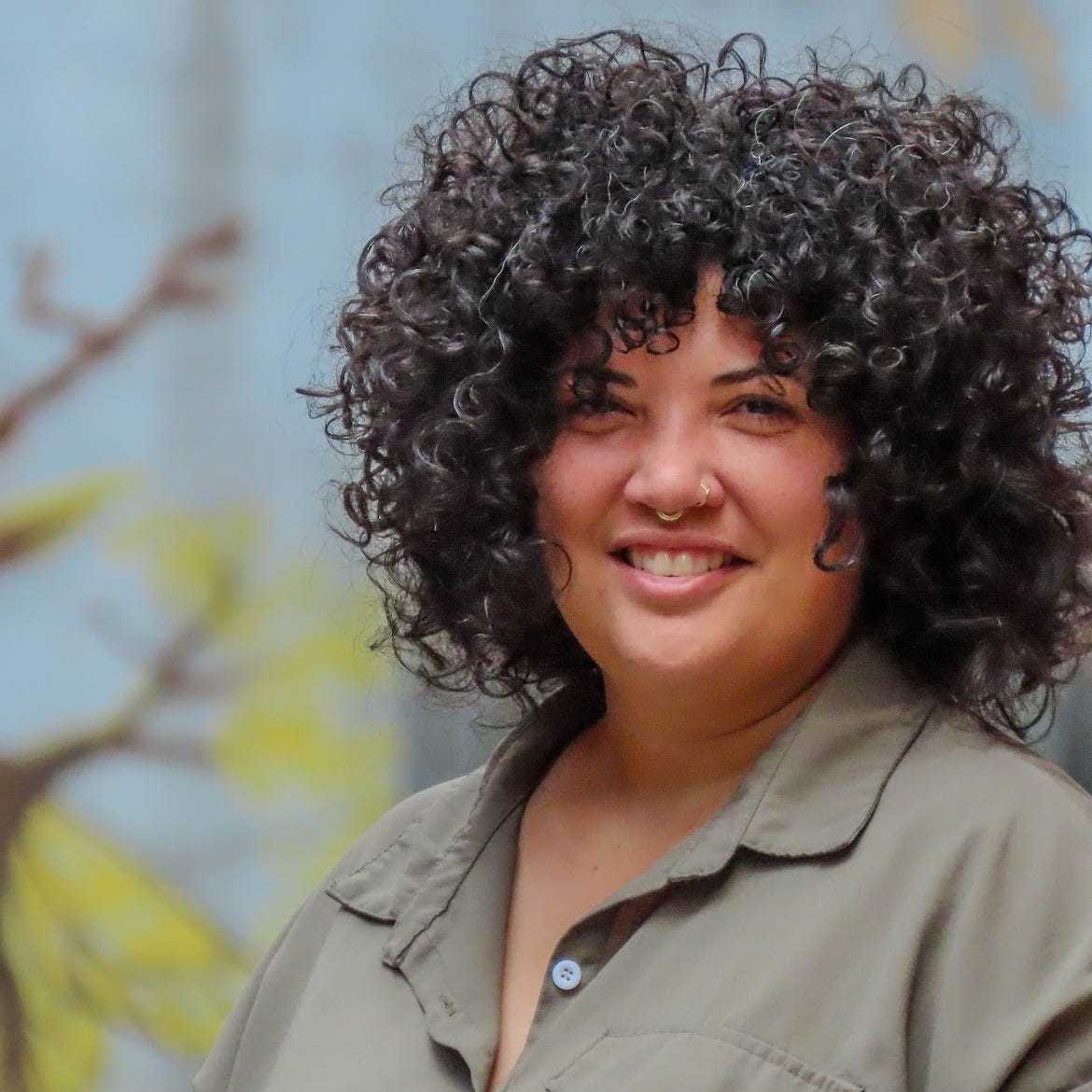
Today, I’m delighted to welcome Shawna Ayoub to Life after Trauma. Shawna is a brown, queer, Durham-based writer and instructor. She teaches through Survive Your Story, Center for Creative Writing, and is Director of Programs for Literary Liberation.
Welcome Shawna, I am so grateful to be in conversation with you. Before we start, can you describe where you’re answering these questions? I’m curious about the sounds, smells, tastes and emotions that surround you as you sit down to engage with these questions.
When I sat down to compose my responses, I was in a waiting room. I’d taken my wife for a follow-up appointment. A woman in a wheelchair was softly moaning. As we waited, I read through the questions. I found the blue light pleasant, but my agitation rose. For a moment, I couldn’t place the reason for my unease. We were sitting by large, bright windows. Fall light was shining on us. The woman in the wheelchair began to cry louder. As the others in the waiting room looked at her, her volume increased. It was difficult for me not to go talk to her, but she wasn’t masked and medical waiting rooms post-COVID are already such a gamble. I heard someone remark that the woman clearly wanted attention. I thought, “Of course she does. She’s in pain and she’s looking for answers. Whatever is happening inside her is unseen. We all need to be witnessed.” I gripped the arm of my chair and decided to wait to answer these questions until I was at home in the privacy of my office. I’m here now, comfortable in a cool silence and deeply relieved.
Wow, this tiny anecdote really illustrates your commitment to witnessing others especially during difficult moments. It feels like a very fertile place to begin. I’m curious what drew you to writing about personal or painful experiences?
My writing was necessary. I came to it very young, with the help of my mother. It was a way to process my very big feelings. I witnessed violence early and regularly. I also grew up as part of the Lebanese-American diaspora resulting from the Lebanese Civil War. Middle of the night calls throughout my early life were common. It was how my father learned which members of our extended family had been injured or killed. This plus persistent poverty and racism contributed to an instability I didn’t know what to do with except try to capture it with words. I made poems, then stories, then found my way to memoir which has been my happy place because I get to be fully honest on the page.
I really relate to this, Shawna. For me, writing is first and foremost a tool for survival. I’m curious about what your writing routines look like these days. Do you have a favourite time of day to write? A favourite prompt?
I’m getting the most value out of silent write-ins. Gathering in a virtual co-working space for a dedicated time period forces me to stay committed to getting my writing done. In that environment, I’m willing to use that time and space for myself. I’m more likely to do the writing (or work) that feels the best to me. I often begin by asking myself: what can I leave behind? What can I set down? What am I carrying that no longer serves me? This allows me to write in a way that frees me from unnecessary emotional and mental clutter.
What do you wish readers understood about writing that deals with difficult or traumatic topics?
I wish readers who don’t share my marginalisations were able to still relate. There have been plenty of times when I’ve shared work by marginalised writers in classes I teach only to have readers openly state they don’t see the point in having to read that type of story because they can’t relate. However, that is the point. Reading allows us to stretch. It grants us the opportunity to try out new perspectives. If mental flexibility was practiced through reading about challenging topics, I think we would experience less victimisation because the predators who may have learned to be predators through internalised norms could learn otherwise. Reading authentic survivor texts can change the world.
Absolutely! Reading survivor stories was transformative for me at a personal level. I think it can have a similar impact on a societal level too. Creating these stories isn’t always easy though. How do you manage triggers that arise as you write? Do you have particular techniques or practices for grounding yourself while you’re writing about painful things?
Breathing is my best friend when it comes to triggers. Early in my writing practice, I used to sit with a hot cup of tea and just hold it until it cooled. I wrapped my hands around the mug whenever any hard feelings arose. That grounded me. Gradually, I shifted toward aromas, and that naturally led me to breath. I still love a hot cup of something, especially if it has lavender in it.
Hot drinks are essential for me too! How do you know when writing is helping you move through something, versus when it’s retraumatising?
When I have strong physical responses to my writing, I know that I’m not ready to do that work yet. I feel my throat choke up, my shoulders tense, my thighs clamp shut. I need to be able to relax into my body in order to let the words flow.
When that happens, I wait until I can sit with my thoughts and not have so much tension grip me. Sometimes I’ll talk it out. Sometimes I’ll walk it off. I’ve come to trust that the tension will ease. I’ll be ready. The writing will happen. It might take several tries for the words to make sense, but they will.
We have to be patient with ourselves when we embark on this work. That’s a lesson it’s taken me a long time to learn. As you write, how do you decide what belongs on the page, and what you keep for yourself? Put another way, how do you set your boundaries as a writer?
When I’m considering what I will share, I ask myself who it will hurt and how. My first concern is myself. That may sound selfish, but if I’m writing about abuse, I need to ask myself: Am I putting myself in danger? Am I putting someone else in danger?
Next I think about whether I am reacting or writing an authentically thought out piece. It’s easy to write anger. And blogging platforms like Substack make it very simple to publish those raw feelings. But I’ve learned that I need to be ready to share my work. I can’t always take back what I’ve put out there. I’ve learned that the hard way. But I’ve also learned that what I’ve put out there has amazing rewards.
Through the work I’ve published, I’ve consistently received private feedback from readers who see themselves in a line or an experience. There is no better feeling than knowing I’ve helped bear witness or be a mirror. Letting another survivor know they are not alone – touching just one person with any piece I write – that is always my goal.
Reading (and reading about trauma, in particular) has been instrumental in my recovery. What is your relationship to reading? How has it impacted your wellbeing? Your experience as a writer?
I read constantly, usually three books at once. Typically, I check out an audiobook through the library for when I walk, drive or clean, read a book on my Kindle at bedtime, and have a physical book I make notes in. Right now, it’s more than that because my wife and I have restarted our liberatory reading practice. To me, reading is essential. It is secondary to breathing. Through it, I experience other worlds, other perspectives, and I feel seen. Finding yourself in another’s person’s words is beautiful. When I write, I hope readers can experience some level of that through what I choose to share.
What is your favourite book?
My favorite book for years was A Little Princess by Frances Hodgson Burnett. I used to read it twice a year, but the white savior aspect of it all no longer speaks to me. So now, I don’t know. There is so much out there. I think it’s safe to say my favorite genre is speculative fiction. I love alternate futures. I love afro-futurism. I love books where there’s joy and possibility.
What are you reading now?
Right now I’m reading my comfort author Stephen King. But I’m also reading two books I’m really, really excited about. One is How to Be Sick by Toni Bernhard. It was recommended by disability Substacker vōx. I’m excited to be reading it alongside ED Recovery Substacker Parker Heyford. I’m also reading Jennifer Givhan’s Salt Bones, and not nearly as quickly as I’d like. Every line is delicious. I haven’t devoured it because I insist on giving it my full physical and mental attention. It’s too good to do otherwise. Givhan is a fellow survivor, and it comes through in her lyricism.
Thanks so much for these recommendations, Shawna. I’m excited to discover these writers’ work. And thanks for being part of The Understory Conversations. It’s been such a pleasure to chat with you.

If you enjoyed this essay, you might also appreciate:


💕 If this piece resonated with you, please tap the heart below to help spread the word.
💬 In the comments, I’d love to hear your reflections on my conversation with Shawna. What resonated with you? And what made you think differently about your own approach to writing about trauma? Let’s discuss in the comments!
 | A guest post by
|